Cacti and other succulents in Thailand
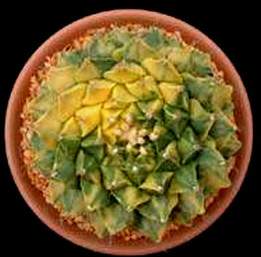 |
| Photo 1. Obregonia denegrii cv. |
Nowadays there are plenty of cacti growers in the East, including Japan, Thailand, Taiwan and Malaysia who are very experienced in growing unusual forms of cacti – crested, monstrose and variegated. One of them is Mr. Veerasak Seetangsuk from Thailand – a collector and supplier of cacti and other succulents.
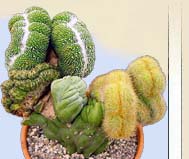
Mr. Seetangsuk (his nickname is "Deaw") was born in 1971 and graduated from the Rajamangala Institute of Technology in Bangkok, Chemistry Technical Department. Collecting cacti and other succulents has been his hobby for many years. Gradually the hobby grew into his primary business – for almost 8 years running he sells the plants he grows. Mr. Seetangsuk is an owner of a large collection of cacti the photos of which you can see in his site http://deawcactus.tripod.com (there you can also find the price-list).
 |
| Photo 2. Gymnocalycium quehlianum cv. |
The cacti grow fine in Thailand and there's no need in a greenhouse as the climate in this country is a tropical one.
There are many photos of unusual forms of cacti in the site of Mr. Seetangsuk. Almost all of them were propagated by grafting the off-shoots but some of the plants were raised from seeds. Mr. Seetangsuk doesn't use artificial lights for propagation of his plants. He says that he has many sources all over the world to get the plants he wants but sometimes he exchanges the plants with his friends.
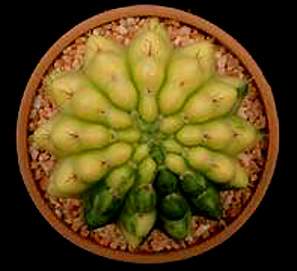 |
| Photo 3. Notocactus.pampeanus cv. |
Mr. Seetangsuk says that when growing from seeds gathered from variegated plants the number of variegated sprouts sometimes reaches from 70 up to 100 percent (in Astrophytum species, for example). But seeds from a variegated Melocactus sown by his friend gave only 5 percent of variegated plants.
Mr. Seetangsuk also states that you can certainly get variegated seedlings from a variegated plant with a flower on a variegated part of a stem. But if the flower of a variegated cactus is on a green part of the stem the seedlings will also be common.
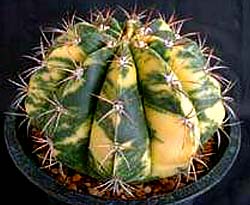 |
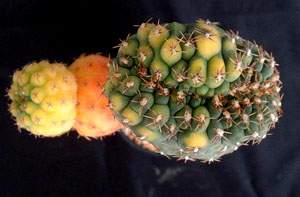
| Photo 4. Melocactus.conoiedes cv. |
Most of his cultivars and variegated plants are grafted, but some of the plants manage to grow on their own roots.
The following stocks are preferred: Hylocereus, Harrisia jusbertii, Myrtillocactus geometrizans, Pereskiopsis, Ritterocereus pruinosus.
To contact Mr. Veerasak Seetangsuk write him to deawcactus@yahoo.com – he understands English well though it isn't his native language.
| 
|
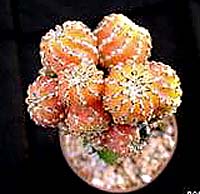
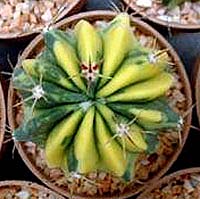
Photo 5. Discocactus.horstii cv.
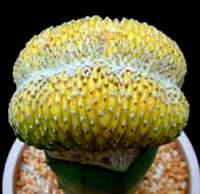
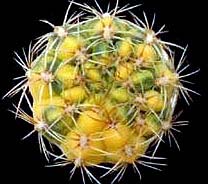
| Photo 6. Discocactus horstii f.aurea cristata
| |
| 
|
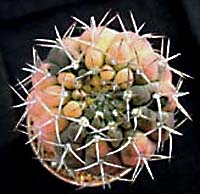
Photo 7. Ferocactus recurvus cv.
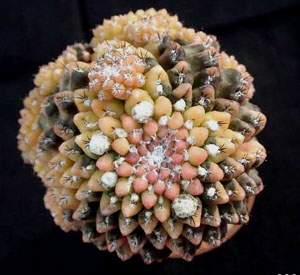
| Photo 8. Gymnocalycium.multiflorum cv.
| |
| 
|
Photo 9. Gymnocalycium stellatum cv.
| Photo 10. Neochilenia sp.
| |
| 
|
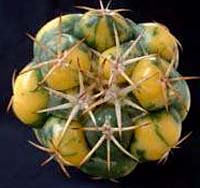
Photo 11. Coryphantha elephantidens cv.
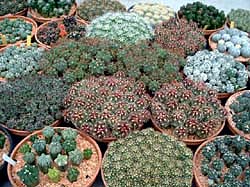
| Photo 12. Astrophytum hybrids
| |
| 
|
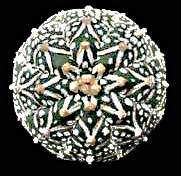
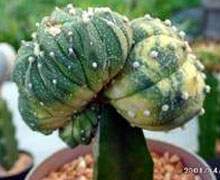
Photo 13. Astrophytum ?Super Kabuto?
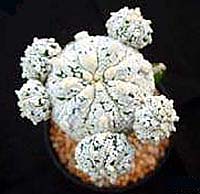
| Photo 14. A. ?Super Kabuto?
| |
| 
|
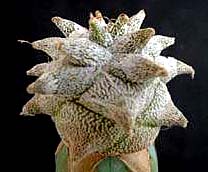
Photo 15. A. asterias cv.
| Photo 16. A. coahuilense cv.
| |
| 
|
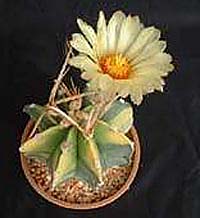
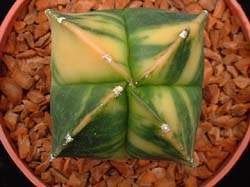
Photo 17. A. crassipinum cv.
| Photo 18. A. myriostigma v.nudum
| |
| 
|
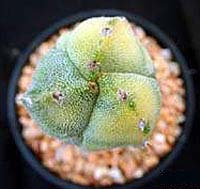
Photo 19. A. myriostigma cv.
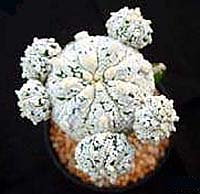
| Photo 20. A. ?Super Kabuto?
| |
|
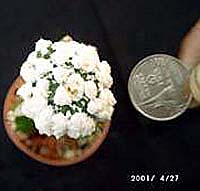
| Photo 21. A. asterias cv.
|

 Каталог