THE SHORT TAXONOMY OF THE TURBINICARPUS GENUS
Valery Zlotin, Moscow, Russia
Translated Anna Bulavko
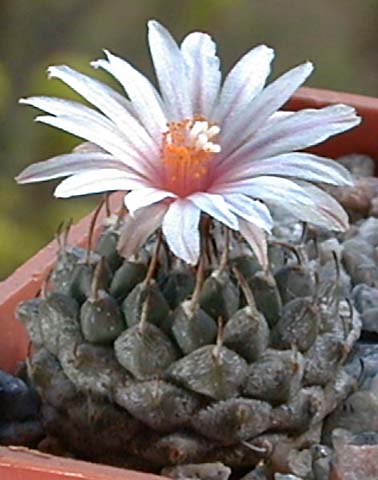
There is no a single cacti lover who hasn't kept in his collection tiny plants of this genus. By popularity rate it can be compared only with Athrophytum and Mammilaria . They are not capricious in growing, take small place and blossom richly. The Motherland of these plants is Mexico.
The genus history begins in 1927, when Bart Klissing in the state Tamaulipas, in the burned, almost sterile area, found a plant, which the following year was described by Bedeker under the name of Echinocactus schmiedickeanus . (In the early history of cactus taxonomy, most of globular cacti were placed in the genus Echinocactus , because only a relatively small number of species were known). During the next years other species, that were to be later included in Turbinicarpus , were discovered and described. These were plants described as Pelecyphora (valdeziana 1930 and pseudopectinata 1935), Echinocactus (macrochele 1931), Thelocactus (loph 1934) and Strombocactus schedulembocactus (pseudomacrochele 1935).
The name Turbinicarpus was first used by Curt Backeberg for a subgenus of Strombocactus in 1936. A year later the subgenus was segregated and raised to the rank of genus by Curt Backeberg and Franz Buxbaum. The name descends from the Latin words turbinatus – possessing the form of "whipping top" and carpos – body or foetus.
It wasn't until 1948 that the name Turbinicarpus was used to describe a new species by Curt Backeberg and H.J.Jacobson, when they described Turbinicarpus klinkerianus . Then in 1956 Bravo and Marshall transferred most of these species into the superficially similar genus Toumeya , having made the exception for the two species of Pelecyphora . Backeberg, as many others, did not accept that these plants were related to Toumeya , so he continued using his own genus when describing T.polaskii and roseiflorus . In 1969 Kladiva and Buxbaum erected the new genus Normanbokea and placed in it two Pelecyphora species (P.valdeziana, P.pseudopectinata ), leaving behind the single species, Pelecyphora aselliformis .
In 1977 Charlie Glass and Robert Forster made an important revision of the Turbinicarpus genus. They transferred the two species of Normanbokea to Turbinicarpus and reduced many of the Turbinicarpus species to varieties of T. schmiedickeanus . This very revision has become the basis of most of the current understanding of this genus.
In 1981 Rzhiga transferred the genus Gymnocactus into Turbinicarpus , which was accepted by most specialists. The acceptation made G.aguirreanus , which was included into genus Escobaria (in 1998 Charles Glass transferred this species into deliberately created for it Acharragma genus). Five years later, in 1986, Edward Anderson transferred all of the Turbinicarpus species (including those previously described under Normanbokea and Gymnocactus ) into Neolloydia . He decided that all the representatives of this genus have the neothenic form i.e. are able to blossom and give flowers in the juvenile age. These changes, however, have not been accepted neither by cacti lovers, nor by botanists-scientists and they have continued to describe new species as Turbinicarpus . As a result in his summarizing "Cacti family" Anderson was obliged to refuse from his own proposition and describe Turbinicarpuses according to the generally accepted taxonomy.
During the nineties many new and interesting taxa were described including T. bonatzii, booleanus, hoferi, rioverdensis, jauernigii, pailanus, panorottoi and alonsoi . Later the T. panorotto was found to be invalidly described and renamed T.schmiedikeanus ssp. andersonii .
In 1998 Taylor and Panarotto carried out the degradation of the rank of some taxa, mostly in groups of schmiedikeanus and pseudomacrochele . Most of these changes were accepted by taxonomists and Turbinicarpus lovers and now schmiedikeanus species includes following varieties:
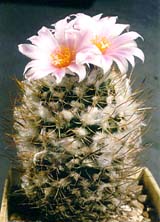 |
Photo 16
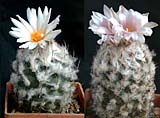 | Photo 17
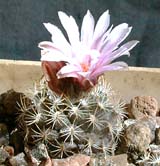 | Photo 18
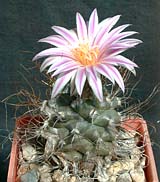 | Photo 19
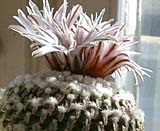 | Photo 20
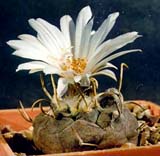 | Photo 21
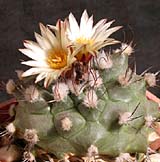 | Photo 23
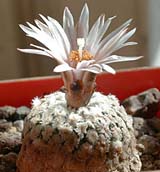 | Photo 24
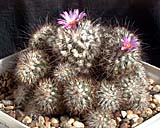 | Photo 25
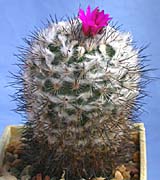 | Photo 26
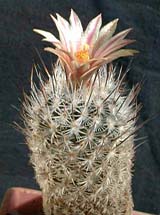 | Photo 27
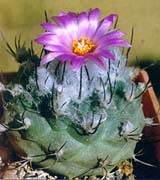 | Photo 28
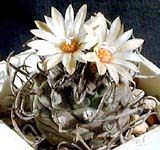 | Photo 29
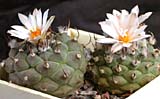 | | Photo 30
| | | | | | | | | | | | | |
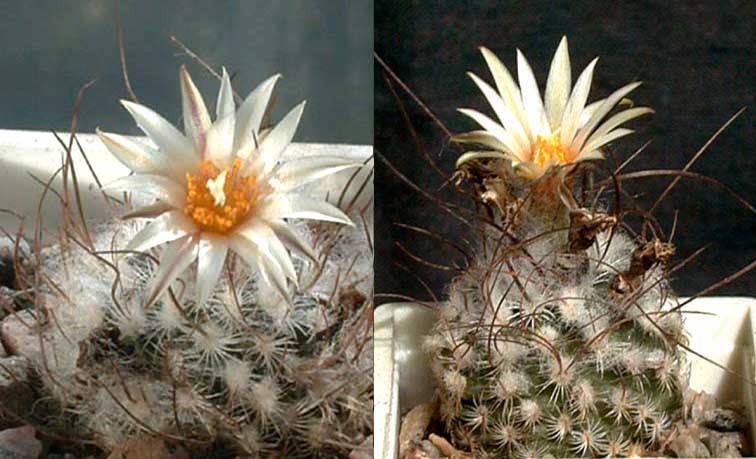
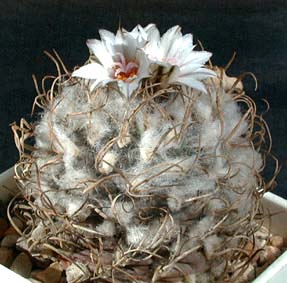
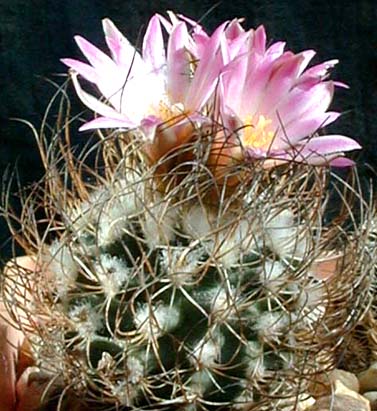
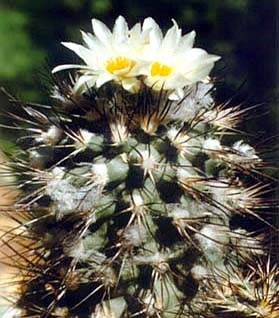
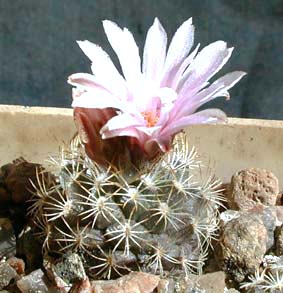
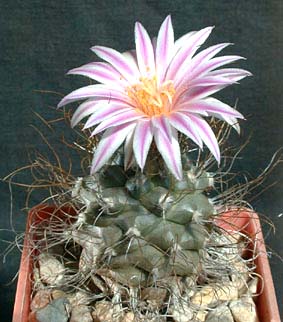
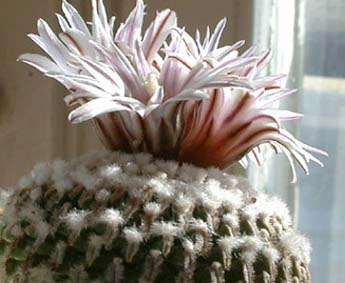
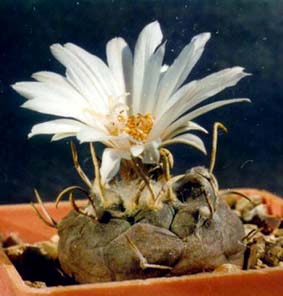
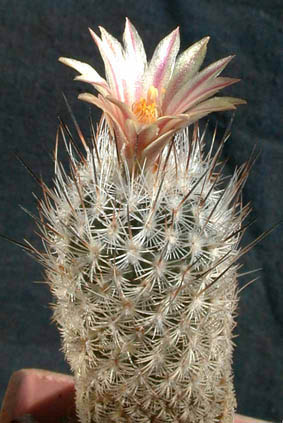
- andersonii Mosco (Photo 1)
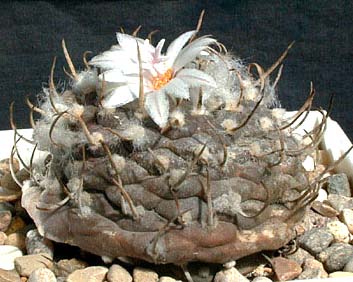
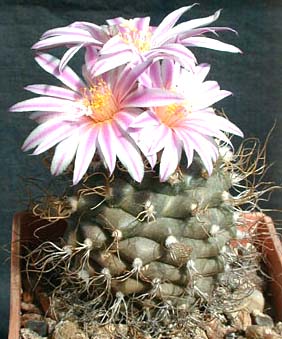
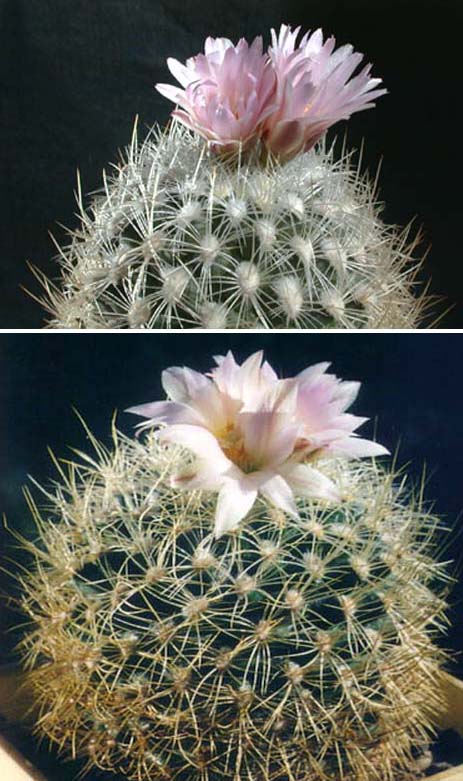
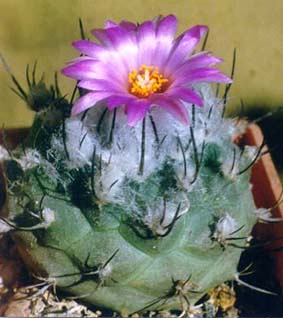
- dickisoniae (Gl. & F.) Glass & Hofer (Photo 2)
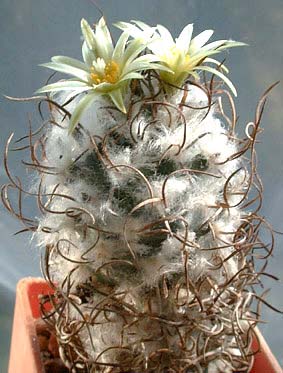
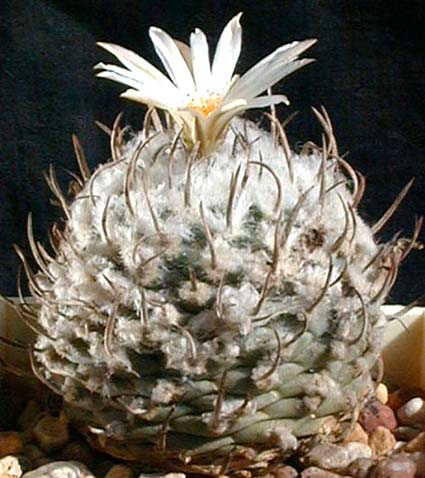
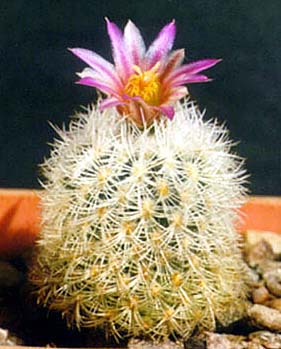
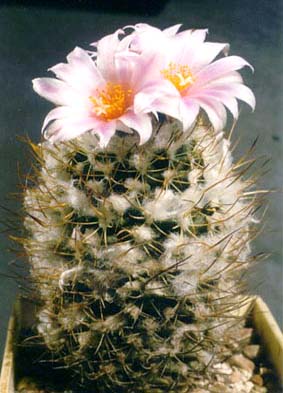
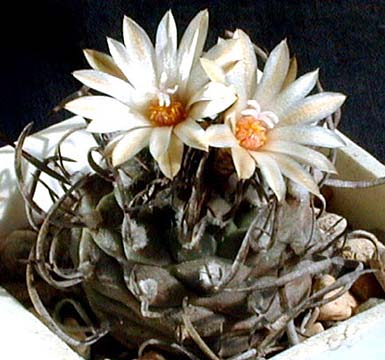
- flaviflorus (Frank & Lau) Gl. & F. (Photo 3)
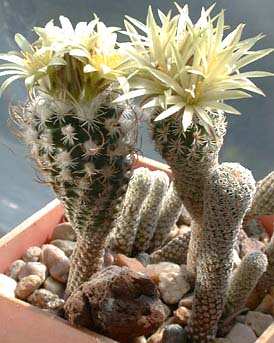
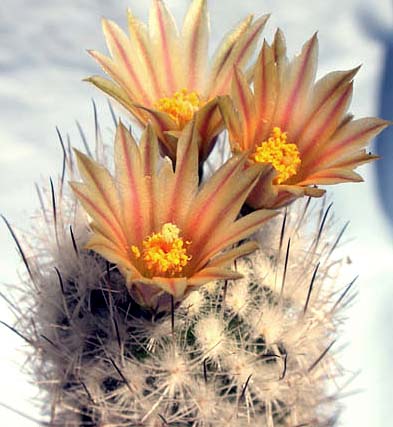
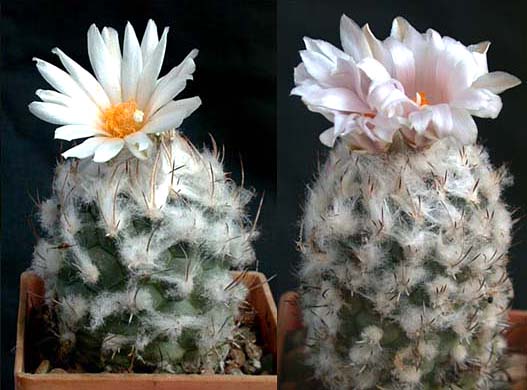
- gracilis (Gl. & F.) Glass & Foster (Photo 4)
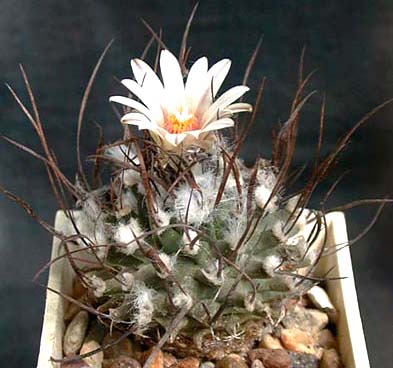
- klinkerianus (Backbg. & Jacobs.) Gl.& F. (Photo 5)
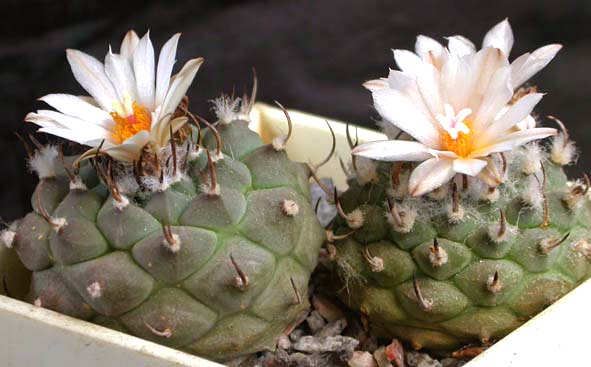
- macrochele (Werdermann) Glass & Foster (Photo 6) (includes our favorite polaskii ) (Photo 7) (macrochele ssp. frailensis P. Lechner and Jantschgi (Turbi-Now, 5:14, 1998) (macrochele ssp. kupcakii J.J. Halda and Horacek - to all appearances, is simply redescription of the type)
- schmiedickeanus
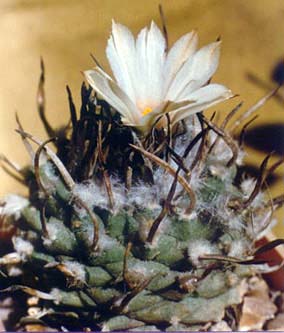
- schwarzii , (Photo 8)
- and in the species pseudomacrochele are included:
- krainzianus (Frank) Glass (includes either form or "gut" variety minimus (Frank) Diers) (Photo 9)
- lausseri Diers и Frank (Photo 10)
- pseudomacrochele (Backbg.) Buxb. & Backbg. (Photo 11)
- sphacellatus Diers & Frank
Though practically nobody has agreed with the alterations made by Moscow botanist A.B.Dowald. In 1997 he erected two new genera – Brawocactus for T.horripilus and Kadenicarpus for T.pseudomacrochele, lausseri sphacellatus . This alteration was made because of the visible differences in the seed-structure. Besides, he replaced the species T.beguinii, mandragora, subterraneus and zaragozae (together with strange taxa gautii (Echinamastus gautii ) and (smithii ) back into the genus Neolloydia . He also proposed to widen the genus Pediocactus and include in it the genera Turbinicarpus, Neolloydia, Scletocactus and so on. In 1999 Jonas Luthy reduced the rank of some taxa, belonging earlier to the genus Gymnocactus , including them into the genus T.mandragora :
- mandragora ssp. beguinii
- mandragora ssp. booleanus
- mandragora ssp. mandragora
- mandragora ssp. pailanus
- mandragora ssp. subterraneus (Photo 12)
- mandragora ssp. zaragozae (Photo 13)
Beside that, J.Luthy reduced the rank T.ysabelae to T. saueri ssp. ysabelae . If ignore Dowels propositions, the situation in the genus Turbinicarpus after the last changes seemed to be stabilized for the beginning of the new millennium. Seemed to be, but didn't! In 2000 Mosco and Zanovello erected a new genus Lodia for our old friend mandragora . It had been proposed by various authors that T. mandragora was a transitional taxa between Turbinicarpus and Pediocactus , but hardly these differences can warranty any changes to the name. This link to Pediocactus has also been shown by Wallace by his work which suggests in an inclusion of T.pseudomacrochele in the Pediocactus/ Epithelantha group. (Turbinicarpus being in the same group with Ariocarpus ). And again, not all the specialists have agreed.
Nowadays according to Andersen, who doesn't accept Luthys propositions as to the mandragora and ysabelae species, the genus Turbinicarpus included following species:
- alonsoi Glass & Arias
- beguinii (Taylor) Mosco & Zanlvello (v. senilis - longbarb cultivar (Rowly, 1972))
- bonatzii Frank (sometimes it is included in schmiedickeanus )
- booleanus Hinton
- gielsdorfianus (Werdermann) John & Riha (Photo 14)
- hoferi Luethy & Lau
- horripilus (Lemaire) John & Riha (with 2 varieties - ssp. horripilus и ssp. wrobelianus Nitzschke и Anaya Montes (2000). В 2000 г. In 2000 Hvastek and Hilda described the variety ssp. kvetae , which almost surely is a synonym to ssp. wrobelianus )
- jauernigii Frank
- knuthianus (Boedeker) John & Riha (Photo 15)
- laui Glass &
Foster (Photo 16)
- loph (Werdermann) Buxbaum & Backbg. (Photo 17)
- mandragora (Fric ex Berger) Zimmerman
- х mombergeri Riha (Photo 18) (natural hybrid T. laui x T. pseudopectinatus )
- pailanus
- pseudomacrochele (Backbg.) Buxb. & Backbg. (Photo 19)(4 varieties, see above)
- pseudopectinatus (Backbg.) Glass & Foster pseudopectinatus ssp. jarmilae J. Chvastek и J.J. Halda, 2000 г. (Photo 20) - the real name for pseudopectinatus v. rubriflorus
- rioverdensis Frank (Photo 21)
- saueri (Boedeker) John & Riha saueri ssp. nelissae Halda and Panarotto, 1998
- schmiedickeanus (Boedeker) Buxb. & Backbg. (8 varieties, see above)
- subterraneus (Backbg.) Zimmerman (Photo 12)
- swobodae Diers (Photo 23)
- valdesianus (Moeller) Glass & Foster (Photo 24)
- viereckii (Werdermann) John & Riha (Photo 25) (2 varieties - ssp. major (Gl. & F.) John & Riha (Photo 26) и ssp. viereckii )
- ysabelae (Schlange) John & Riha
- zaragozae (Gl. & F.) Glass & Hofer (Photo 27)
Altogether – 25 species and 1 natural hybrid.
In collection the plants named T.roseiflorus are wide spread. Most of the specialists are sure that it is a hybrid appeared in the European collections, the origin of which is now difficult to define.
In catalogues one can often see T.lilinkeuiduus – disfigured T.klinkerianus , which occurred because of the mistake in the translating program (Malta, Cactus Heaven, 1998). One can see their identity by placing these two words under each other: klinkerianus lilinkeuiduus
Catalogues also contain T. pulcherrimus . Under this name one can find two plants – either T. x mombergeri or another natural hybrid between T.klinkerianus and pseudopectinatus .
Gerhard Keres many years proposes plants under following names:
sp. El Huizache . This is a bit larger form of the T.schmiedickeanus ssp. klinkerianus with longer barbs.
sp. Negrita . This is form of the schmiedickeanus ssp. klinkerianus which practically doesn't distinguish from the type sp. Miquihuana – flat, "squashed" form of the schmiedickeanus ssp. klinkerianus .
In conclusion, wandering from the subject, I'd like to tell some words about the Turbinicarpus culture. As it was said in the beginning of the article, the habitat of Turbinicarpus is a burned by the sun desert. They grow in the mineral substrate practically without humus and by the small quantity of precipitations. By many species their greater part of body is plunged into ground living on the surface only almost flat or globular-flat apex. In collection, on the contrary, plants are kept in comparatively rich soils and by the abundant summer watering. As a result, our "domestic" plants don't look alike natural ones, exceeding them greatly in size. Thus, my 18-year old exemplar T. schmiedickeanus ssp. schwarzii is 6 cm high, 15-year old Т. loph - 10 сm, 14-year old Т. laui - 15 сm. At the same time, according to the descriptions of these species, their height must be 2cm, 3,5cm and 1,5cm correspondingly! So the following conditions of keeping Turbinicarpus can be proposed: mineral soil, rare watering, and lots of sun. (Though, I, unfortunately don't follow these recommendations).
Literature:
- Edward F. Anderson, "The Cactus Family". Timber Press (US), 2001.
- A very good revision of the Turbinicarpus genus contains the book of the four Czech authors (Zahar, Zlatnik, Luks and Drab) "Turbinicarpus genus", but it was edited in 1996 and doesn't have the description of the species, belonging earlier to the Gymnocactus genus, and some of the recently described species.
- Since 1996 the Austrian group studying Turbinicarpuses, began to publish the periodical "Turbi-Now". It was planned to edit two fascicles in a year. The schedule has been strictly followed and by the 2002 appeared 11 fascicles with the volume of 4-14 pages. Every fascicle is devoted to some species or a complex of species.
Some materials from the series of web-sites are also used in the article.
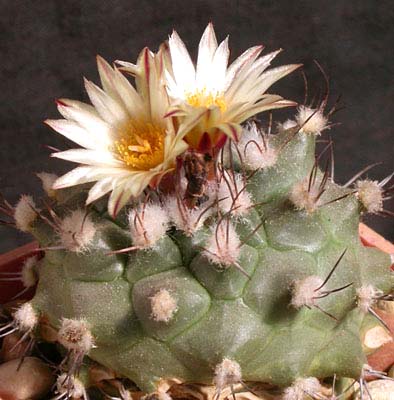
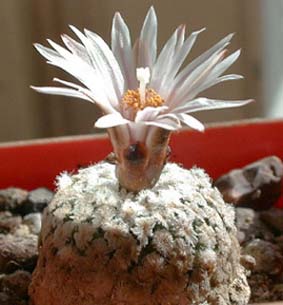
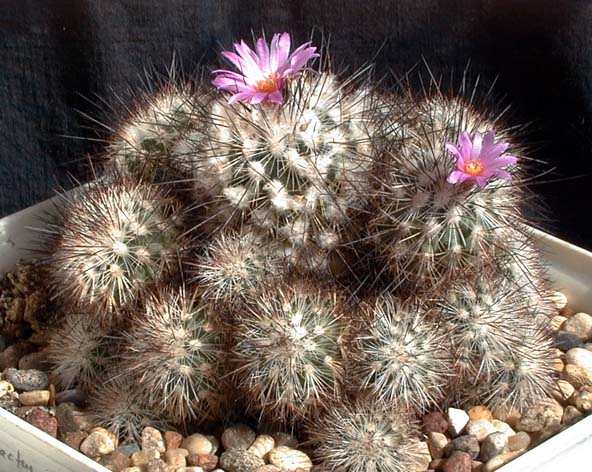
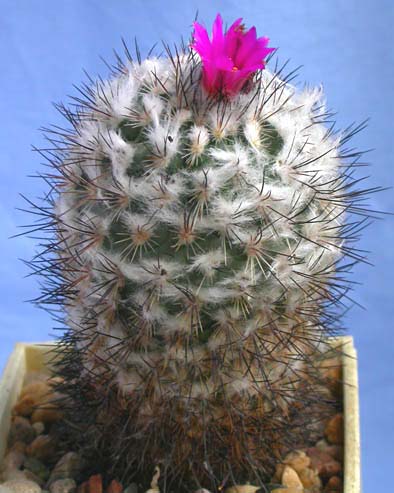
Plants on pictures and photos by author.