WE CONTINUE EXPERIMENTS ON THE IRRADIATION OF SEEDS
Andrew Smirnov, Chelyabinsk,
Nikolay Shemorakov, Kaluga
Irradiation with X-rays is quite simple, as the other forms of irradiation of cacti described in literature. The distance to the seeds is about 20-30 cm; duration of radiation depends on one’s own purposes. If an investigator wishes to alter the form or structure, then radiation must be applied for a long time, if only a change in stem color is needed then a brief irradiation is done. In any case changes will only appear in the second or third generation.
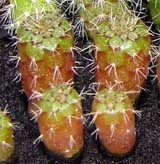
Photo 3.
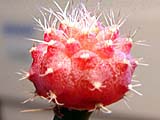
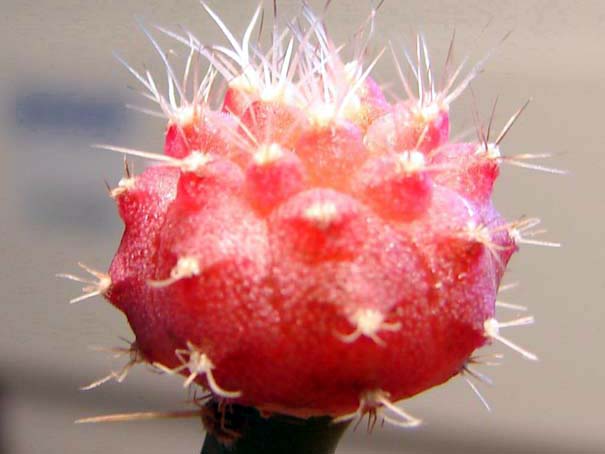
Photo 4.
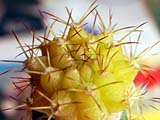
Photo 5.
| | |
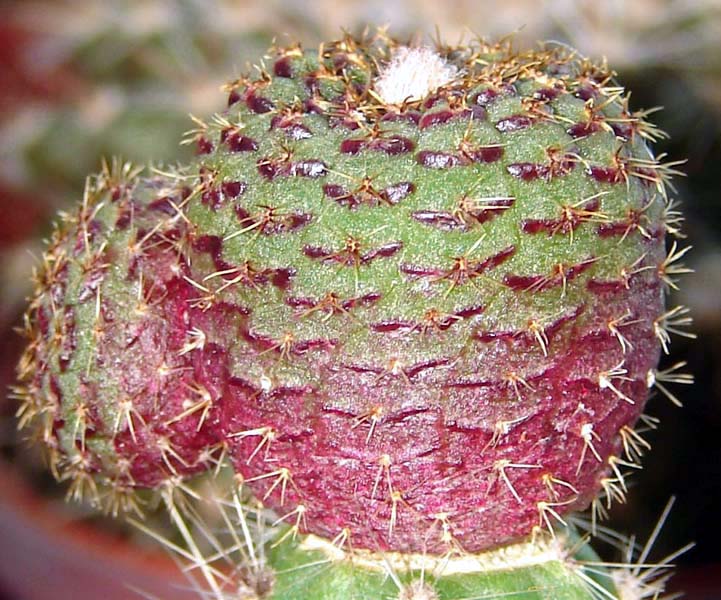
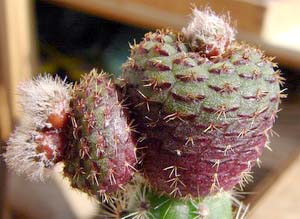
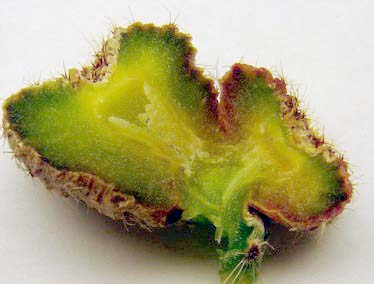
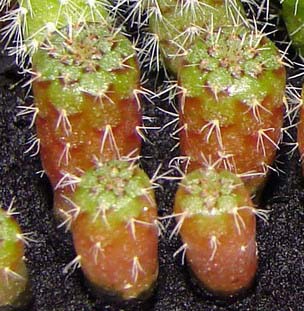
Frailea cataphracta (see photo) is an X-ray mutant from the third generation of the seeds. The germination rate was very high though the seeds were not soaked in any solution. The seeds were kept in a mini green-house with an air moisture of about 80–90% and temperature up to 30C, the soil was an usual C&S mix. The sprouts appeared on the second or the third day and grew very fast even without growth stimulators. All sprouts from this batch of seeds were red-colored. We also noticed that sprinkling of sprouts with a growth stimulator containing active component 24-epibrassinolide boosted the speed of growth dramatically.
As we already said the sprouts had red-colored stems. In the age of one month one sprout was grafted onto a Cleistocactus. The grafting was successful. This plant is beet-colored, and only the top part of the plant is green with dark red patches. When the plant was the size of a hazelnut it began to flower and bring off-shoots. The flowers were cleistogamous, there were up to 10 seeds in a fruit.
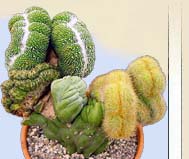
Gymnocalycium michoga x G. mihanovichii v. pirarettaense is a red colored hybrid (Photo 4). Germination rate was about 99 percent. The sprouts must be grafted on the 5th or 7th day of their life because they can’t grow on their own roots. After some time the plants changed the color to dark brown and only the top part of the stem remained bright red.
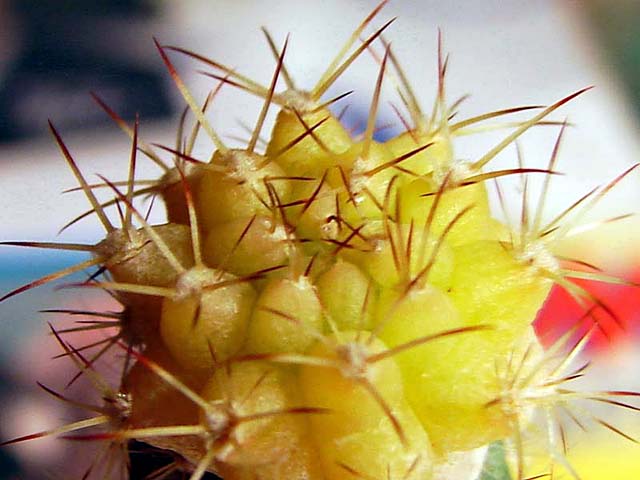
G. mihanovichii v. friedrichii x G. eurypleurum is a yellow-colored hybrid (Photo 5). Germination rate was about 70 percent, all the sprouts from this batch of seeds were yellow. The sprouts must be grafted during the first week of their life on Pereskiopsis (this hybrid can’t grow on its own roots either). A peculiar feature of this hybrid is a change in color from yellow to pink in very young sprouts. After they reach the size of a pea they again begin to turn yellow starting from the top. The spines of this hybrid resemble the spines of Echinocactus grusonii - they are also amber-colored. The conditions for germination of seeds are similar to those for Frailea.